


Successful community policing means officers are proactive, building relationships free from bias and engaging neighbors with care, empathy and a mix of service professionals in response to calls for help.


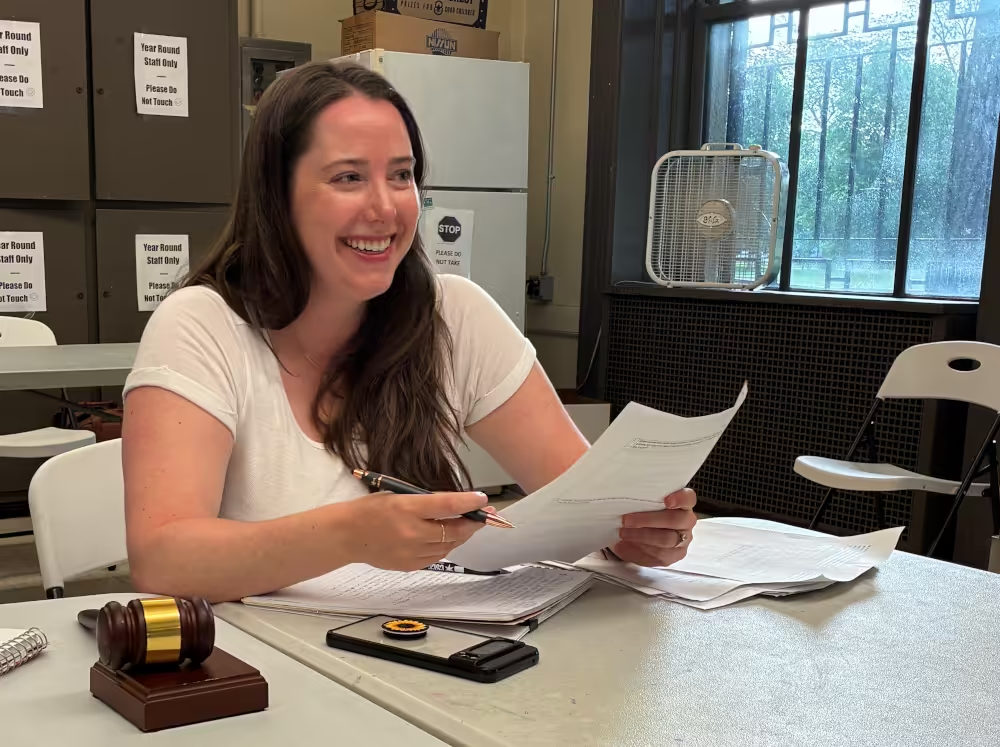
These key tenets are the result of the Chicago Police Department’s nine-month study that will inform significant changes for police beat meetings, 9th District Police Council Member Erin Vogel said at the council’s June 25, 2025, meeting at the McKinley Park field house.

Vogel reviewed the findings of the Community-Focused Policing Project & Workforce Allocation Study, which incorporated feedback from stakeholders, including more than 750 community members taking part in interviews and focus groups, and about 150 sworn police officers and civilian police members also sharing their perspectives.
Law Enforcement and Relationships
A successful community-engaged policing program would focus on better law enforcement, Vogel said, including the right response at the right time, de-escalation of heightened situations and sharing community resources.
The study pointed to strategies to improve relationships, including police engagement outside of crises, long-term assignments to support beat integrity and bike and foot patrols to make police more visible and approachable.
Identified Challenges
Tracking community policing successes and fixing issues is another key recommendation, Vogel said, supported by meaningful metrics and transparency, and follow-up on cases and feedback loops.

At the outset of the study, Chicago Police Department Superintendent Larry Snelling identified department-wide challenges for its community policing, Vogel said, including lack of a cohesive vision, over-reliance on individual programs and a dearth of guidance to fit community engagement into day-to-day policing and detective work.
Beat Changes
Ultimately, successful community engagement means officers listen to a community, collaborate on solutions and then follow through, Vogel said.

This model points to needed changes for bi-monthly police beat meetings, which currently recite tallies of major crimes and allow community members to report problems directly to police, but there is often scant problem-solving and often no follow-up, Vogel said.
Officer Allocation
The study will also shape how police leadership decide to allocate officer deployment, Vogel said.
The next 9th District Police Council meeting is set for 6:30 p.m. on Wednesday, July 30, 2025, at Taylor Lauridsen Park, 704 W. 42nd St., Chicago.

The next Chicago Police Meeting for Beat 912 is at 6:15 p.m. on Wednesday, July 9, 2025, at the McKinley Park field house, 2210 W. Pershing Road, Chicago.
Photograph by Kevin O'Neil


Log In to comment on this item.
Subscribe
Report
My comments