


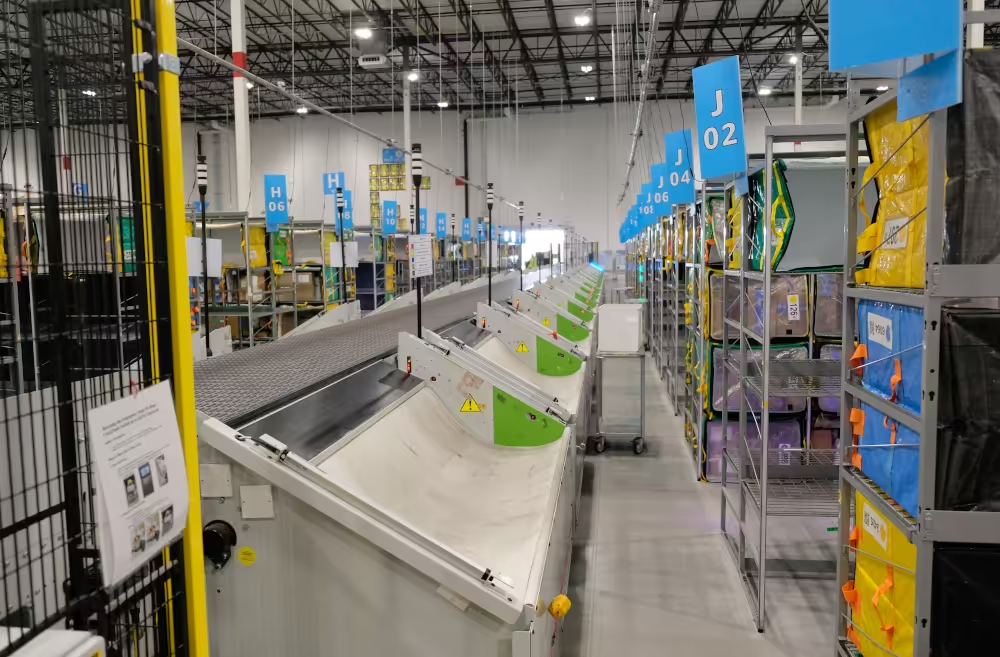
The Amazon DHX5 last-mile warehouse in Chicago’s McKinley Park neighborhood has been as busy as it gets to ship Prime Day orders, according to management and the bustle seen throughout the site during and after the July 8-11, 2025, event.


“We’re always busy,” said warehouse manager David Werem. However, for Prime Day, “we do twice the business.”

Work ramps up and extends past Prime Day, Werem said. “Day two starts the escalation. A Prime Day can last four days for the warehouse.”
Hiring of additional flex workers starts months in advance at the warehouse at 3523 S. Ashland Ave., Chicago, he said.
Hard Loop Realities
The site handles all last-mile product deliveries for packages under 50 lbs. in a zone that ranges from the Wrigleyville neighborhood to West 73rd Street, Werem said.
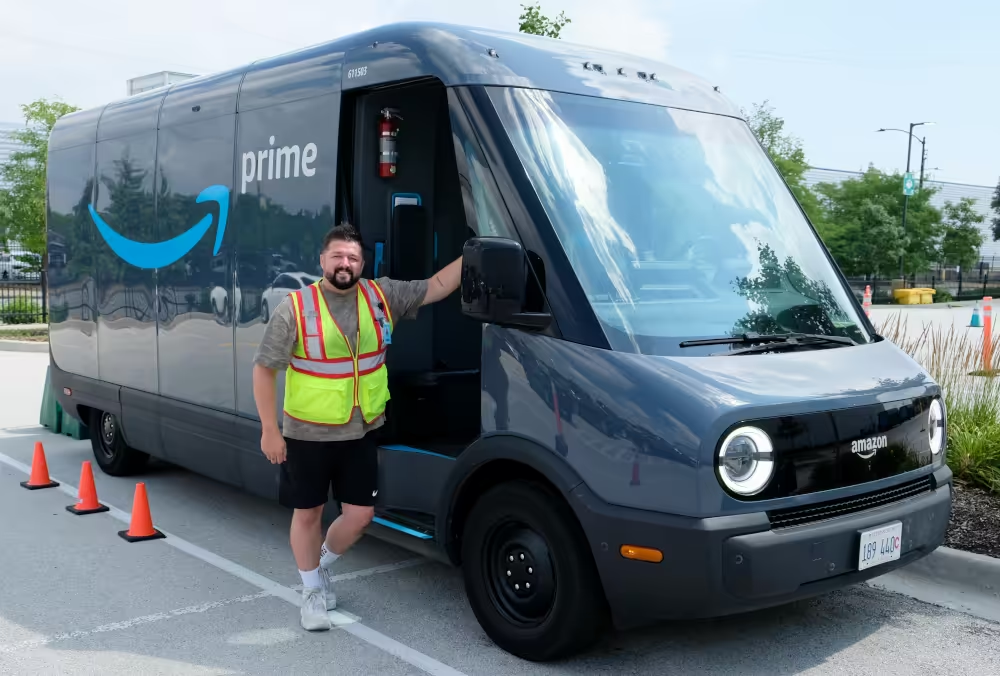 Amazon DHX5 warehouse manager David Werem shows off the Rivian electric delivery van used to train new drivers.“Our site is a little bit different due to the hard realities of delivering into the Loop,” he said.
Only Electric Vans
These deliveries occur using fleets of custom-designed, zero-emission Electric Delivery Vans (EDVs) that Amazon commissioned from Rivian.
“Only electric vans are used out of the McKinley location,” Werem said. This ends up being more economical and fits well with last-mile deliveries, he said. The vans and charging infrastructure have been in use at the site since 2022.
Netradyne and Amazon Flex
“Vehicles were designed to the preferences of the delivery associates,” Werem said. The vans include safety features, especially for how drivers use the vehicle, and security elements like auto-locking doors to the cargo area.

Each van is equipped with a camera system from Netradyne that monitors road safety, stop signals and signs, and driver attention. Drivers use the Amazon Flex app to follow a step-by-step process in deliveries, Werem said.
Safety Focus
Each driver starts out with a safety score at the beginning of the day. “Scores go up or down,” Werem said. Detected problems can result in a driver being told to pull over and replaced by another driver.

Werem said the primary focus is safety, which extends to the well-being of drivers, including an individual driver budget for safety equipment; provision of things like hats, sunglasses, frozen towels and “lots of water”; temperature and weather tracking; and even extra breaks up to 60 minutes when justified by conditions.
Delivery Service Providers
Enforcing and supporting safety is a key qualification for the third-party Delivery Service Providers (or DSPs) that provide personnel to drive the trucks, Werem said. A single DSP vendor handles all Loop deliveries for the warehouse.
“DSPs get scored and incentivized on safety,” he said. “DSP [designation] is highly sought-after,” with a six-year waiting list.
Auto Divert To Aisle
Safety upgrades have extended to the McKinley Park warehouse’s floor, too, with new automation that helps mitigate the potential for lifting and twisting injuries, Werem said.
The Auto Divert To Aisle (or ADTA) is a new conveyor belt system that uses laser scanning to identify packages and where they should be queued for delivery. As packages pass down the belt, they divert into hampers with slings that keep packages at a constant height for associates to grab.

Pilot Programs
This changed the labor setup, including “creating new roles to occupy,” Werem said. To date there have been no layoffs at the warehouse, he said.
Werem noted the constant pace of innovation he’s seen working at Amazon. A facility like the DHX5 warehouse might see dozens of new pilot programs considered each year, and maybe five or six will stick, he said.
Rural Super Rural
One of the most significant Amazon-wide developments that Werem anticipates is its new Rural Super Rural program (or RSR).
“RSR is supposed to be super-huge,” he said.
This $4 billion expansion of the Amazon delivery network focuses on reducing delivery distances and times to further-flung destinations, including rural and exurban communities.

50 Years Versus 16
“It’s a major grid expansion,” Werem said. “The goal is to get product faster to consumers.”
Werem pointed to 2015 as an inflection point for Amazon, at which time the company fundamentally re-honed its logistics planning and execution.
“What has taken FedEx 50 years, we did in 16,” he said.


Log In to comment on this item.
Subscribe
Report
My comments