


The following section discusses McKinley Park’s historic ties to the CMD, and provides an overview of the existing industrial real estate inventory as well as employment trends. This section also presents existing and permitted uses in the neighborhood’s industrial districts, and discusses the potential of innovative uses for the CMD, based on community input.
- A significant portion of McKinley Park (26.6 percent) is devoted to manufacturing and industrial uses. In addition to the CMD, the neighborhood is located within the boundaries of two PMDs. Each PMD has specific zoning regulations that determine the permitted and special uses.
- While the CMD remains a strong economic asset, residents are concerned about the close proximity of industrial uses to residential areas. The community envisions a new direction for industrial uses and sees public engagement in the development process essential to realizing that vision.
- Two buildings within the CMD are part of a global C40 Reinventing Cities competition to transform underutilized sites as beacons of environmental sustainability and resilience. Supporting these type of sustainable renewal projects offer opportunities to maintain jobs locally and ensure the health and well-being of residents.
- Connecting existing and potential new businesses with assistance programs and resources, as well as creating workforce training and employment opportunities for local residents, was a top priority identified for the plan.
- Excellent access to the region’s freight rail network and easy access to the interstate makes it appealing for industries to locate in the CMD and PMDs. However, the truck traffic generated from these uses presents environmental and mobility challenges for local residents. The plan will identify and provide solutions for mitigating the negative impacts of freight on adjacent land uses.
Historically, McKinley Park was home to the once bustling CMD, which spans the neighborhood’s southern border. As seen in Table 8.1, industrial square footage makes up the majority of commercial real estate square footage in the neighborhood. As of the third quarter of 2018, there were 5.8 million square feet of industrial space within McKinley Park, with a vacancy of 11.3 percent. This vacancy rate is higher than the surrounding South Chicago submarket (4.4 percent) as well as the City of Chicago as a whole (5 percent).
Table 8.1. Commercial Real Estate Square Footage and Vacancy by Type, Q3 2018
| Building Type | Total Rentable Building Area (SF) | Total Vacant Rentable Building Area (SF) | Vacancy Rate (%) |
| Industrial* | 5,876,597 | 664,200 | 11.3% |
| Office | 1,826,062 | 27.900 | 1.5% |
| Retail | 865,899 | 34,256 | 4% |
Source: CMAP analysis of CoStar data
*Includes Flex Properties
Over the past decade, industrial vacancy in McKinley Park rose from 19 percent in 2008 to a high of 24.8 percent in 2013. Since 2013, however, vacancy rates have declined with tenants moving into the area’s industrial spaces. Approximately 88 percent of industrial buildings in McKinley Park are currently occupied. As seen in Figure 8.1, in 2017 the net absorption of industrial space was the highest it has been in a decade, which means that more tenants were moving in than moving out of industrial properties in the neighborhood.
Figure 8.1. Annual Industrial Inventory Vacancy and Absorption in McKinley Park, 2008- 2017

Source: CMAP analysis of CoStar data
Through the outreach process, stakeholders have identified the revitalization of the CMD as an opportunity to attract non-polluting businesses to the neighborhood. Some residents suggested that the CMD should have mixed use spaces, including residential, commercial, and light industrial properties. Others suggested that eco-industry businesses, such as indoor farming facilities, shared kitchens, and food incubators would fit well with the CMD. Overall, there was a consensus that the potential uses within the CMD should provide jobs for the neighborhood without having an environmental impact on the community.
History of the CMD
Created in 1905 by an East coast inventor, Frederick Henry Prince, the 265-acre CMD was the first planned industrial district in the nation. Within ten years of its development, the district was expanded and housed more than 200 firms including a mix of light industrial, heavy industrial, as well as warehouse and distribution companies. Big name companies like Wrigley, Spiegel, and Goodyear operated within the district and were the area’s major employers. Many of the buildings within the CMD had direct rail connections. This made the shipping and transportation of goods convenient, even for the smallest companies operating within its premises. Aside from its excellent rail connection, the CMD offered combined district-based utilities, banking, business incubator services, and even had its own police force. For much of the 20th century, the bustling district was a thriving part of Chicago’s manufacturing sector and became one of the largest industrial parks in the world.
Today, the CMD’s historic buildings stretch along Pershing Avenue, from Oakley Ave to Paulina Street, and encompass several zoning districts, including residential (RT-4), commercial (C1-3) and manufacturing (M1-1, M2-3). Each of these zoning districts has different permitted uses, which are outlined in Appendix A. Several buildings of the original CMD are also located east of Ashland Avenue between 35th Street and Pershing Road, within the boundaries of PMD 8. Although many of the companies that once operated within the CMD have left the neighborhood, the district is home to a variety of businesses that range from commercial to manufacturing establishments. Some businesses manufacture household items and metal products, while others are food caterers and wholesale food distributors. Two educational institutions are also located within the boundaries of the CMD, the National Latino Education Institute and Horizon Science Academy. Many of the historic CMD buildings still stand empty. However, there is interest in revitalizing the district for innovative uses that are compatible with the changing nature of manufacturing in the 21st century.
C40 Reinventing Cities Competition
The C40 Reinventing Cities Initiative is a global call for urban projects that transform underutilized sites into spaces that exemplify environmental sustainability and resiliency. In 2018, the City of Chicago offered a Pershing Road parcel, which includes two six story industrial buildings of McKinley Park’s historic CMD, as a bid site for the competition. The city’s participation inthe C40 competition aims to enhance Chicago’s southwest communities, particularly McKinley Park. Proposals for the site are encouraged to provide active uses and amenities that enhance Chicago’s workforce, and contribute to property values and the local tax base. Currently, the Pershing Road buildings are zoned for light industrial uses (M2-3) and are located immediately to the north of an active manufacturing base, so the city will consider proposals that are compatible with the existing land use context. Since the Reinventing Cities competition focuses on projects that promote environmental sustainability, the winning proposal is expected to be a carbon-neutral project that enhances the site’s resilience to flood events. As of September 2018, two teams have been selected to participate in the final phase of the competition, and will be submitting their proposals for the Pershing Road parcel.
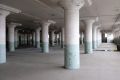
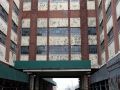
From "Tour Offers Peek Inside Central Manufacturing District Buildings," published February 27, 2018, in the McKinley Park News:






As seen in Figure 6.4, much of the eastern and southern portions of McKinley Park are located within a PMD. The Chicago Planning Commission first created PMDs in the late 1980s to protect concentrated industrial uses from residential and large scale retail development pressures. The PMD designation discourages the conversion of properties to non-industrial uses in order to promote growth and development of the city’s industrial employment base. As of spring 2016, DPD has embarked on a multi-year industrial corridor modernization initiative, which incorporates community-based goals, market data, and infrastructure assessments. The goal of the initiative is to unleash the potential for advanced manufacturing and technology-oriented jobs in some areas, while maintaining traditional industrial activities in other areas.
One PMD with two subareas exist in McKinley Park, each with slightly different permitted uses. Much of the eastern and southern portions of the neighborhood are located in the Stockyards PMD (PMD 8 A and B) and the CMD, while smaller portions of the northern section of McKinley Park fall within the boundaries of the Pilsen PMD (PMD 11 A). Although the City of Chicago zoning code prioritizes industrial uses within a PMD, certain types of commercial and public or civic uses are permitted within McKinley Park’s PMDs. Appendix A shows the uses that are permitted by right within each of the neighborhood’s PMDs.
Aside from the permitted uses, certain uses within the PMD are designated as special uses, and must follow an established procedure to determine if the use will be compatible with the surrounding development patterns. A special use business needs to file an application with the Chicago Zoning Board of Appeals, then a Zoning Administrator reviews each proposal and makes a recommendation prior to the Board’s public hearing. This case-by-case review examines the anticipated land use, site design, and operational impacts of the special use. Special uses within a PMD are subject to additional reviews that determine whether the use will have an effect on existing manufacturing activities, including land use conflicts and nuisance complaints. Following the public hearing, the Zoning Board of Appeals makes the final decision and the vote of three Board members is needed to approve a special use application. Some of the special uses within McKinley Park PMDs, which are subject to this review process, include parks and recreation, drive-through facilities, and gas stations.
Figure 8.4 Planned Manufacturing District Zoning in McKinley Park

Source: Chicago Metropolitan Agency for Planning, 2018.
Existing Uses within the PMD
McKinley Park’s PMDs are home to a variety of businesses that foster the neighborhood’s industrial base. Businesses ranging from furniture and aluminum manufacturers to warehousing and distribution companies operate within McKinley Park, and benefit from the neighborhood’s immediate access to a robust transportation network. Companies like T2 Cabinets, Crystal Windows and Doors Corp, and 555 International Inc. manufacture interior design products for residential and commercial clients. Other businesses such as Trejo’s Iron Works Inc. and Industrial Maintenance Welding, manufacture iron products and provide welding services. Aside from manufacturing, many of the businesses within the PMD’s are food wholesalers and distributors. Companies such as Eagle Products Inc. and Mexicali Food Products Inc. provide wholesale distribution of food, and operate alongside big name companies, like Pepsi.
A notable business within McKinley Park’s PMD is 36Squared. The business is located within a 186,000 sq. ft. industrial building and features a business incubator, as well as mixed-use spaces available for rent to potential tenants. Current tenants that occupy the building include artists, architects, as well as technology companies. The 36Squared business incubator is a nonprofit that offers onsite training classes for Chicagoland entrepreneurs that want to grow their businesses. Networking event and training opportunities offered by the incubator are free and cover a variety of topics, such as marketing, grants, and small business loans. Businesses located in McKinley Park can benefit from convenient access to training and networking opportunities hosted by the 36Squared Business Incubator. Aside from 36Squared, several other businesses are bringing innovative uses to McKinley Park’s PMD. One of these establishments is Marz Community Brewing Company, which has been operating within the PMD since early 2018. The establishment not only offers craft-brewed beers, but also provides a place for community members to come together. Another business that shifts away from traditional manufacturing uses within the PMD is the ComEd training facility, which opened in 2016. The facility provides economic and community benefits, while meeting the need to train current and future workers on managing the electricity delivery system. ComEd estimates that approximately 4,000 employees will receive training at the facility annually, and the company is working with After School Matters to develop a program that exposes Chicago high school students to skills needed for work in the construction trades.
Aside from industrial parcels within the designated PMDs and CMD, other industrial parcels exist throughout McKinley Park. As seen in Figure 8.4, most of these parcels are located away from residential areas and along the neighborhood’s major arterials including Ashland Ave, Archer Ave, as well as Western Ave. Moreover, many parcels are located in close proximity to the I-55 interstate, which offers good highway access for the businesses located there. Taking advantage of the close proximity to the neighborhood’s transportation network, the majority of establishments located in these areas are logistics and auto-oriented businesses. These industrial parcels could become areas where certain types of industrial uses can be concentrated, leaving the CMD open for innovative uses that can spur the community’s economic development without negative the negative impact from truck traffic.
Two districts in McKinley Park are included in the National Register of Historic Places. The Original East District is bounded by Ashland Avenue to the west, the Chicago River to the east, 35th Street to the north, and Pershing Road to the south. The district encompasses many of the buildings within the current PMD 8. Historic buildings within the CMD, which stretches along the southern border of the study area, are included in the Pershing Road District.
Both historic districts offer various financial incentives for rehabilitation of designated buildings, including a 20% federal and 25% state rehabilitation tax credit. Additionally if a commercial or industrial building is a City of Chicago landmark, incentives for rehabilitation include a 12-year property tax reduction, permit fee waivers, as well as facade rebate programs.
Another top concern for McKinley Park residents is the impact of industrial uses on the neighborhood’s air quality. McKinley Park’s industrial businesses include wholesale distributors and an asphalt plant, which utilize trucks for transportation. Community members are concerned that heavy truck traffic through the neighborhood may have a negative impact on air quality and health of the residents. As a result, a resident-led initiative called Neighbors for Environmental Justice Campaign was recently formed to address air pollution impacts resulting from the neighborhood’s truck traffic and industrial uses. The group raised funds to install several real-time air quality monitors, so that residents can be more informed about air quality in McKinley Park. Through the outreach process, McKinley Park residents indicated that the preservation of green space is an important component of improving air quality in their neighborhood.










Log In to comment on this item.
Subscribe
Report
My comments