


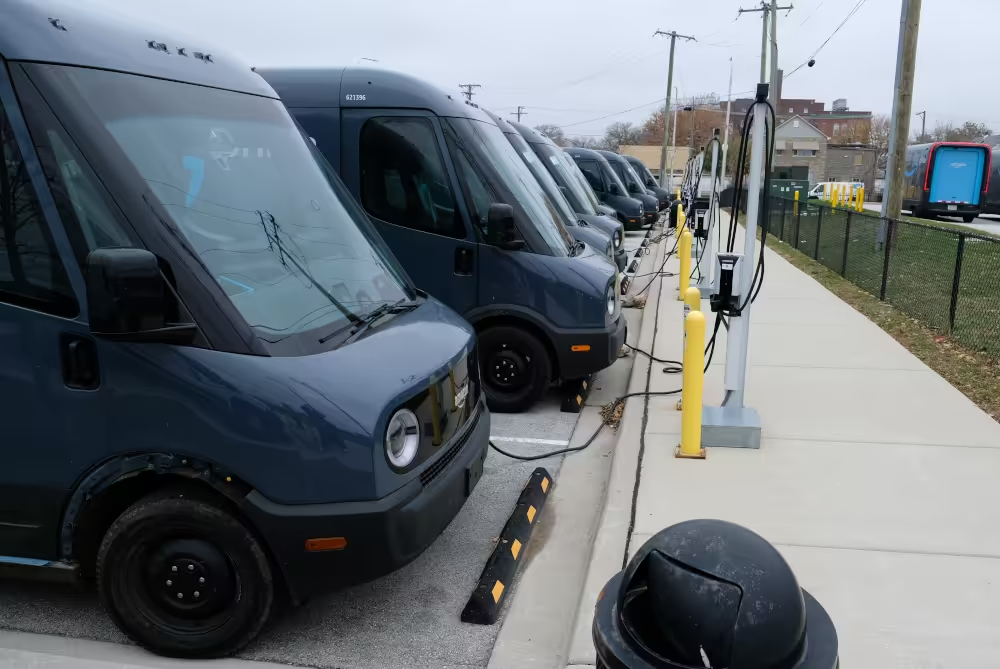
The Amazon DHX5 last-mile warehouse in Chicago’s McKinley Park neighborhood is gearing up for the busiest time of year, conducting operations that would need to dramatically change following passage of a proposed ordinance from 12th Ward Alderwoman Julia Ramirez.


“We plan for two to three months in advance” for the holiday push, said David Werem, DHX5 warehouse manager. “You plan two to three months for one month of work. Staffing is done months prior.”

Volume doubles, and the workforce grows by about 35 percent at DHX5 to accommodate the surge in holiday orders at e-commerce giant Amazon, Werem said. The packages get bigger, too, so fewer can fit on a truck.
Sort Zero
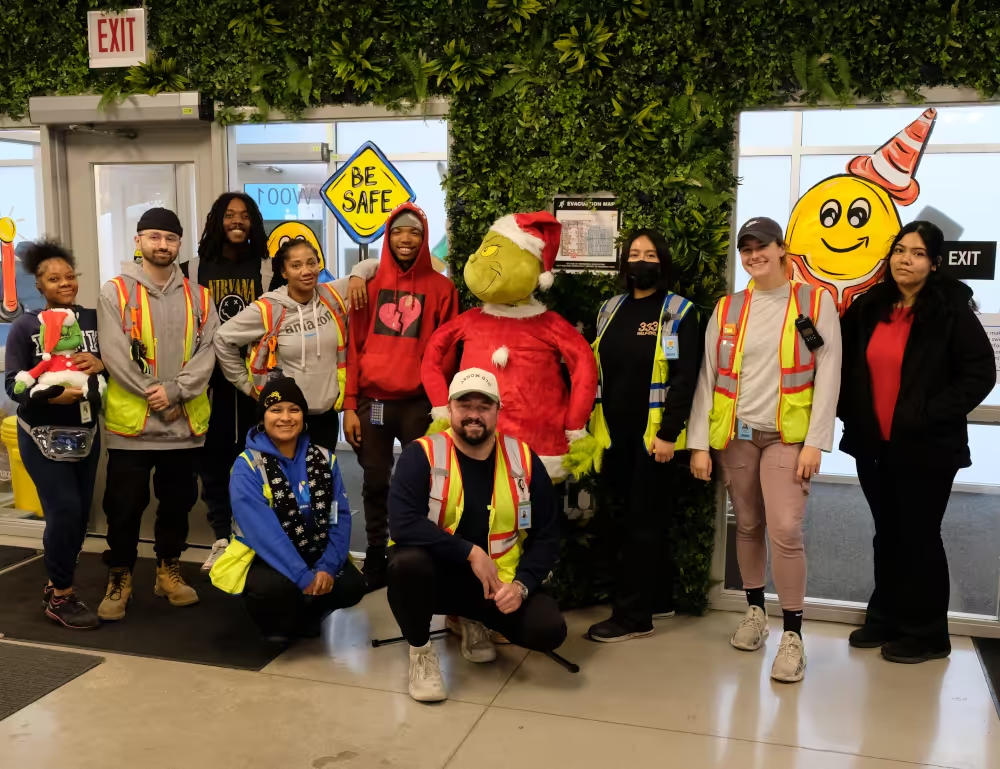 Amazon DHX5 Team Members - and the Grinch - join warehouse manager Dave Werem, kneeling, for a quick photo before peak season begins.DHX5, located at 3523 S. Ashland Ave., Chicago, manages this by adding an extra “Sort Zero” distribution cycle, Werem said, “adding a whole other shift” that runs overnight, with Sort Zero practice runs beginning weeks before the holiday peak.
The Cyber Monday shopping event — this year on December 1 — is “one of the biggest days of the year” for DHX5, Werem said. “The peak officially starts.”
Third-Party Drivers
Werem noted a number of seasonal safety changes to operations, including weather tracking and driver schedule adjustments, and provision of winter apparel for drivers like hats and gloves, sunglasses, and non-slip shoe covers.
As previously reported here in the McKinley Park News, DHX5 employs third-party companies to provide drivers for its Amazon delivery vans, leading them through an on-the-job, seven-week training program, Werem said.
Direct Employees
“The learning curve is the bigger challenge,” he said.
Requiring these delivery drivers to be direct employees of the warehouse operator would be one of the significant changes mandated by the proposed ordinance, which Ramirez submitted to the Chicago City Council on July 16, 2025, when it was referred to the City of Chicago Committee on Zoning, Landmarks and Building Standards.
Cold Storage and Grocery
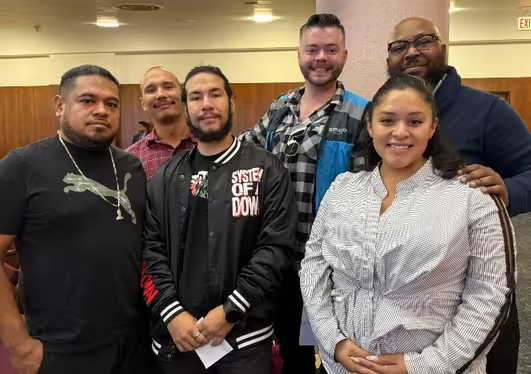 In a photo distributed via her email newsletter to announce the Warehouse Workers Justice Ordinance, 12th Ward Alderwoman Julia Ramirez, foreground, stands at City Hall with unidentified individuals.
Ramirez announced in a September 18, 2025, newsletter that she had met with DHX5 warehouse workers and would push the legislation to “reduce local adverse environmental impacts and create new labor rights provisions.”
As written, the proposed legislation applies to many types of larger warehouses and distribution centers, including for e-commerce fulfillment and at locations where “delivery is made to retail, grocery or wholesale retail businesses,” including cold storage and high cube warehouses.

McKinley Park Impact
In Chicago’s McKinley Park neighborhood and adjacent Planned Manufacturing Districts, the submitted ordinance would seemingly affect many enterprises in addition to Amazon and its DHX5:
- Anthony Marano Co. at 3000 S. Ashland Ave.
- Cougle Foods at 2841 S. Ashland Ave.
- FedEx Ground at 1901 W. 29th St.
- Karis Cold at South Ashland Avenue and West Pershing Road
- Nuñez Wholesale Inc./La Bodega at 3225 S. Western Ave.
- Pepsi Beverages at 1400 W. 35th St.
When sent this list and questions about which neighborhood businesses would be affected, Ramirez said the ordinance is still in draft status.
New Licensing and Approval
“Since our introduction to committee, we have had multiple meetings with the Law Department,” she said. “We are still waiting for a more recent draft.”

As submitted, the ordinance would mandate new licensing and approval for all new, qualifying warehouses, and remove default warehouse approval as currently available at sites within Chicago’s Planned Manufacturing Districts.
Existing Warehouses
The ordinance would also apply to existing warehouses, which would have to comply within a time period: 15 months for the McKinley Park neighborhood’s DHX5 warehouse. Existing licenses would require renewals that include reporting on ordinance compliance, and licenses can be revoked for violations.
Ordinance conditions include air-quality monitoring at warehouse fence lines, “bona fide” community benefits and labor agreements, at least 80 percent of energy usage from renewable sources and other energy-efficiency measures.
Reported and Authorized
“Clean fleet” requirements in the ordinance mandate minimum percentages of delivery trips powered by electric vehicles, and that 95 percent of tractor-trailers delivering to facilities be electric-powered by 2030, subject to market availability.
All fleet use must be regularly reported and authorized by the city, according to the submitted ordinance. Reporting requirements also extend to labor operations at warehouses, which would see numerous changes.
Worker Quotas
These include requirements about use of quotas to assess worker performance: Quota descriptions must be detailed in writing for new hires, and employees can choose not to accept later revisions to quotas in their terms of employment.

Employers are required to provide all quota data to employees, and are also required to track and report all aggregates of worker performance. Employers would have one week to comply with requests from employees for their data.
Civil and Criminal Penalties
The submitted ordinance mandates other workplace and labor changes, including establishment of a private right of action for an employee to sue for ordinance violations.
In addition to setting up civil penalties for corporate officers and for shareholders who have a 10 percent or greater stake in the warehouse operator, the ordinance also establishes misdemeanor criminal charges for ordinance violations.
Violations Fund Enforcement
Money accrued from ordinance violations would then fund ordinance enforcement and warehouse worker education, according to the submitted ordinance.
When asked, Amazon representatives said they had established no position on the submitted ordinance.
Low-VOC Art
At the DHX5 facility, Werem pointed to a number of worker-specific upgrades inside the warehouse, including a sustainability program with gardening and produce for workers, and new incentive and merchandise areas.
Werem also spoke of plans to engage artist Birdseed Anthony to install murals inside the warehouse.
If the submitted ordinance passes, his paint will have to be low in volatile organic compounds: another mandate of the proposed legislation.


Log In to comment on this item.
Subscribe
Report
My comments