


McKinley Park is home to many natural features, including park space, the South Fork of the Chicago River, and many community led beautification initiatives. Residents of McKinley Park are passionate about maintaining their neighborhood’s natural resources and enhancing recreational opportunities for their community. This section outlines the existing conditions of the neighborhood’s natural features, and provides information on several active environmental groups in McKinley Park.
- McKinley Park residents and visitors enjoy open space. The neighborhood’s largest park, McKinley Park, constitutes 95 percent of the open space inventory and is one of the community’s greatest assets. The park offers passive and active recreational opportunities, a space for community events, and trails for walking and biking. Promotion of these resources will not only improve the health and vitality of the community, it can also lead to expanded ecotourism and sustainable economic development.
- The presence of the South Branch of the Chicago River along the Eastern border of the study area could be better utilized. Engagement efforts with the community have found a strong desire to build better connections between the riverfront and the neighborhood through improved amenities.
- Community gardens and the successful McKinley Park Farmers’ Market are important components of the community’s sustainability vision. According to stakeholder interviews, there is a desire to continue the delivery of community programs to improve the overall health of residents.
- A number of programming activities in the neighborhood provide for an active and cohesive community. However, many of these are programs are run by community volunteers. Identifying opportunities to support and enhance educational and recreational opportunities for residents and visitors of all ages will be a strong component in the plan.
Although the South Fork of the Chicago River (Bubbly Creek), borders the eastern portion of McKinley Park, there is no direct river access point within the neighborhood. Moreover, the waterway faces environmental challenges, which hinder recreational opportunities. Because of this, community members have identified the Chicago River as an underutilized asset. Historically, animal waste from nearby meatpacking industries contributed to Bubbly Creek’s environmental degradation. Today, combined sewer overflows (CSOs) are the main source of Bubbly Creek’s pollution. Large storm events often overwhelm the city’s wastewater system, and CSO waste is discharged directly into the Chicago River. The recently completed McCook Reservoir project is one initiative that aims to reduce sewer overflows in Chicago’s waterways. The project is a key component of the Metropolitan Water Reclamation District’s Tunnel and Reservoir Plan, and provides 3.5 billion gallons of storage capacity to capture flood water and waste from combined sewer overflows. With the increased capacity of the McCook Reservoir, CSO pollution of Bubbly Creek can be significantly reduced, making ecosystem restoration possible. In October 2018, the U.S. Congress passed a bill called the America’s Water Infrastructure Act, which includes a restoration project of Bubbly Creek. This requires the U.S. Army Corps of Engineers to enter into an agreement with the U.S. Environmental Protection Agency to facilitate Bubbly Creek ecosystem restoration. The restoration activities would address problems such as stream channelization, poor quality sediment that supports invasive species, lack of riparian habitat, and lack of diverse aquatic life.
Remediation of Bubbly Creek is an important component of improving recreational opportunities and connecting McKinley Park residents to the waterway. Currently the Eleanor Boathouse, located in neighboring Bridgeport, is the nearest access point for utilizing the river. However, better access to the South Fork of the Chicago River is proposed in the citywide Our Great Rivers initiative, a unifying and forward-looking vision for all three of Chicago’s rivers.
Great Rivers Chicago
Led by the Metropolitan Planning Council, the City of Chicago, Friends of the Chicago River, and CMAP, Great Rivers Chicago is an initiative to create a vision for the Chicago, Calumet, and Des Plaines Rivers. The initiative recommends actions for the public and government to take in order to make the rivers inviting, productive, and living by 2040. Several goals to achieve the vision focus on improving the water quality of the rivers to make them swimmable, litter- and odor-free, and habitable for plants and wildlife. Recommended actions include providing real-time water quality monitoring, developing operations plans, and making capital investments to ensure safe water quality.
One of the proposals of Our Great Rivers is a mixed-use development on a vacant parcel at the mouth of Bubbly Creek that would improve access to the river for McKinley Park residents. The proposed development would feature housing, retail, and riverfront recreational opportunities that could create a riverfront destination and transit hub. The proposal includes a pedestrian connection to the Ashland CTA Orange Line station, as well as the Ashland Ave and 31st St buses. Moreover, a water taxi stop would connect the development to the Canal Origins Park and the Eleanor Boathouse via a pedestrian bridge over Bubbly Creek.
Figure 9.1 Rendering of proposed mixed-use development at Bubbly Creek
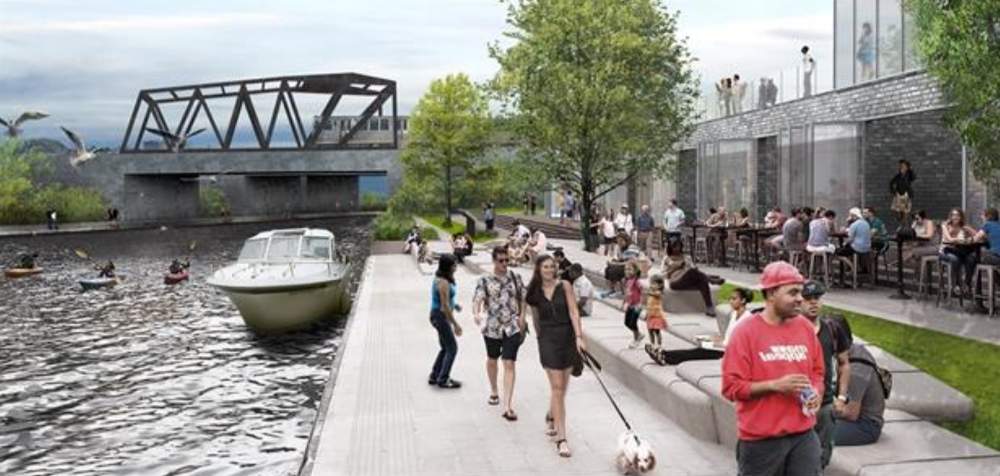
Source: greatriverschicago.com
The neighborhood’s residents enjoy access to 72.5 acres of open space, the majority of which is McKinley Park. The remaining 3.2 acres of open space are made up of smaller neighborhood parks, including Hoyne Park, Kucinski Murphy Park, and Mulberry Playlot Park. Open space makes up approximately 8 percent of total land use in McKinley Park, compared to 7 percent in the City of Chicago, 13 percent in Cook County, and 12.5 percent within the CMAP region. Residents have access to approximately 2.6 acres of open space per 1,000 people, which meets the regional standards for park accessibility.
Table 9.1. Park Acreage by Type in McKinley Park
| Name | Park Type | Acres |
| McKinley Park | Regional Park | 69.3 |
| Hoyne Park | Neighborhood Park | 2.0 |
| Kucinski-Murphy Park | Neighborhood Park | 0.7 |
| Mulberry Playlot Park | Neighborhood Park | 0.6 |
| TOTAL | 72.5 |
Data Source: Chicago Park District Park Locations, 2016.
McKinley Park
 Yoga practitioners hold a position at the McKinley Park farmers market as depicted in "Find Punk Rock, Carnival Games and Community This Week in McKinley Park," published June 10, 2019, in the McKinley Park News.As seen in Table 9.1, McKinley Park is the largest of four parks in the community, and is considered one of the greatest neighborhood assets. The park opened in 1902 as recreational grounds for the often noisy and overcrowded neighborhoods near the Union Stockyards. Today, McKinley Park offers various leisure opportunities and is the center of recreational activities in the neighborhood. The park features many sports facilities including two gymnasiums, basketball and tennis courts, soccer and baseball fields, an outdoor pool, a gymnastics center, as well as an ice-skating rink in the winter months. A playground, a lagoon with a fishing area, and a natural area with paths and trails are also located within the park. In addition to recreational opportunities, McKinley Park hosts a variety of events such as after school programs, a youth summer camp, Midnight Circus, the McKinley Park Farmers Market, and Movies in the Park. Because McKinley Park offers ample recreational opportunities, the park attracts visitors from outside of the neighborhood.
McKinley Park Advisory Council
The McKinley Park Advisory Council plays an important role in developing the park’s recreational opportunities and events. The park advisory council is a voluntary group that meets once a month to promote ways that the community can better utilize the park’s facilities and programs. The group communicates with the Chicago Park District on matters related to the park, increases community awareness of Chicago Park District projects, and secures funding to enhance park facilities. A notable initiative of the advisory council is the development of a dog park in collaboration with the Chicago Park District. The group is raising funds to cover the cost of the project, which once completed, will be the first dog park on Chicago’s South side. Recently, the park advisory council and MPDC successfully won a $5,000 award from the Chicago Community Trust to fund park and community programs. This notable initiative stems from a desire to enhance communication and a sense of community within the neighborhood, through beautifying the park’s old bathhouse with a community mural and providing Spanish and Chinese translation services at key community meetings.
Hoyne Park
Another frequently used neighborhood park is Hoyne Park, located near the intersection of 35th Street and Archer Avenue. The park features a playground and a variety of sports facilities; however, several residents have identified maintenance of the park as an issue. The Omega Delta Baseball and Softball League heavily uses the park’s sports facilities during baseball season, but the park is currently staffed by seasonal workers and does not have a full time park supervisor. The league is a non-profit organization, staffed by all-volunteer coaches and administrators, dedicated to the enrichment of the neighborhood’s youth through recreational activities. Volunteers from the league are working with the resident-led Hoyne Park Advisory Council to address the park’s maintenance issues.
Figure 9.4 Hoyne Park sports facilities and playground
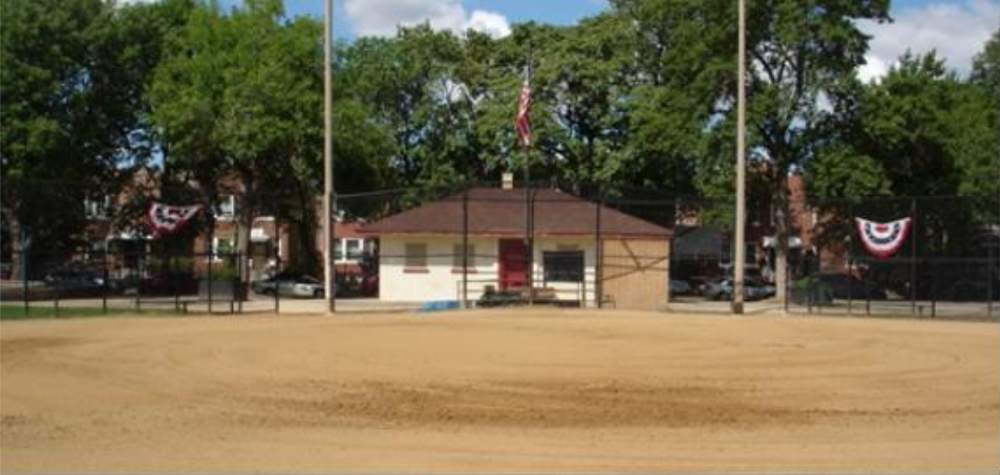
Source: chicagoparkdistrict.com
Kucinski-Murphy Park and Mulberry Playlot Park
Although smaller in size, Kucinski-Murphy Park and Mulberry Playlot Park also provide the neighborhood’s residents with access to open space. These parks do not have any structured programming, but have playgrounds and water features that are utilized by the McKinley Park community. The boulevard along Western Avenue could also become part of the neighborhood’s open space network, with some improvements. Many community members expressed a desire to beautify the boulevard and identified it as an opportunity for bike lanes and other bicycle infrastructure improvements.
Figure 9.5 Mulberry Playlot Park
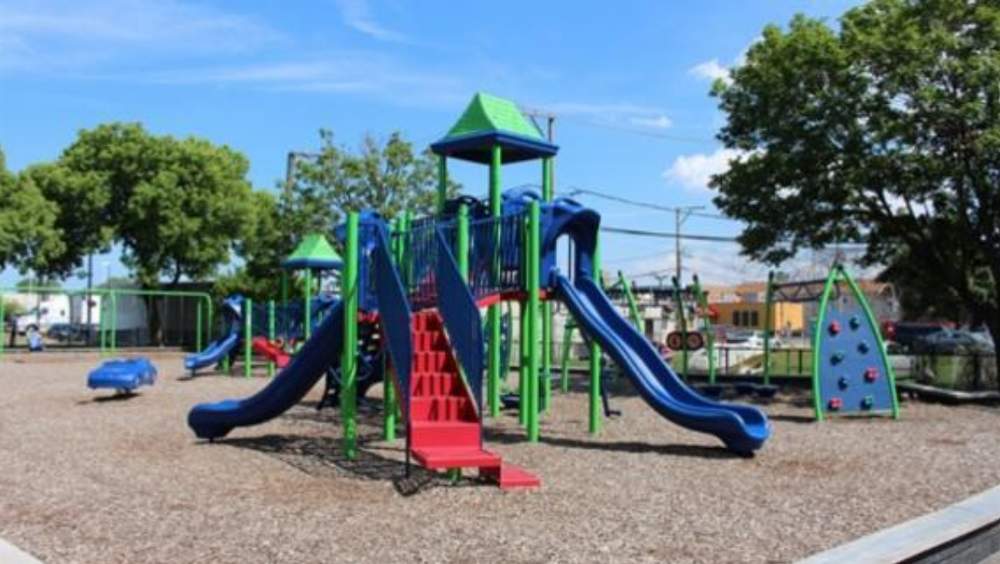
Source: Chicago Park District
Numerous community-led beautification initiatives exist throughout McKinley Park, as community members are passionate about protecting and maintain the natural resources of their neighborhood. The McKinley Park Advisory Council organizes stewardship days, which offer volunteers an opportunity to beautify McKinley Park through activates like trail maintenance, controlling invasive species and planting new species throughout the park. One of the neighborhood’s newest initiatives is the McKinley Community Play Garden, conveniently located behind the public library. The play garden was created in collaboration with Neighbor Space, and offers a community gathering area with nature-focused play for children. Another initiative is the 24-plot community garden on the northeast corner of the McKinley Park grounds, which offers a place for neighborhood gardeners to come together and turn the plots into a productive landscape. A Farmers Market, sponsored by the McKinley Park Advisory Council, also takes place on the McKinley Park grounds from June to September. The market creates an alternative marketplace by providing residents with access to fresh produce, in order to enhance the neighborhood’s quality of life.
Aside from initiatives that focus on bringing community members together, several projects also have a potential impact on stormwater management. One of these projects is the recent five-acre expansion of the McKinley Park lagoon native plant area. This area provides provides a habitat for birds and pollinators, helps retain and filter stormwater with deep-rooted native plants, and improves air quality by sequestering carbon emissions.
Figure 9.6 McKinley Community Play Garden
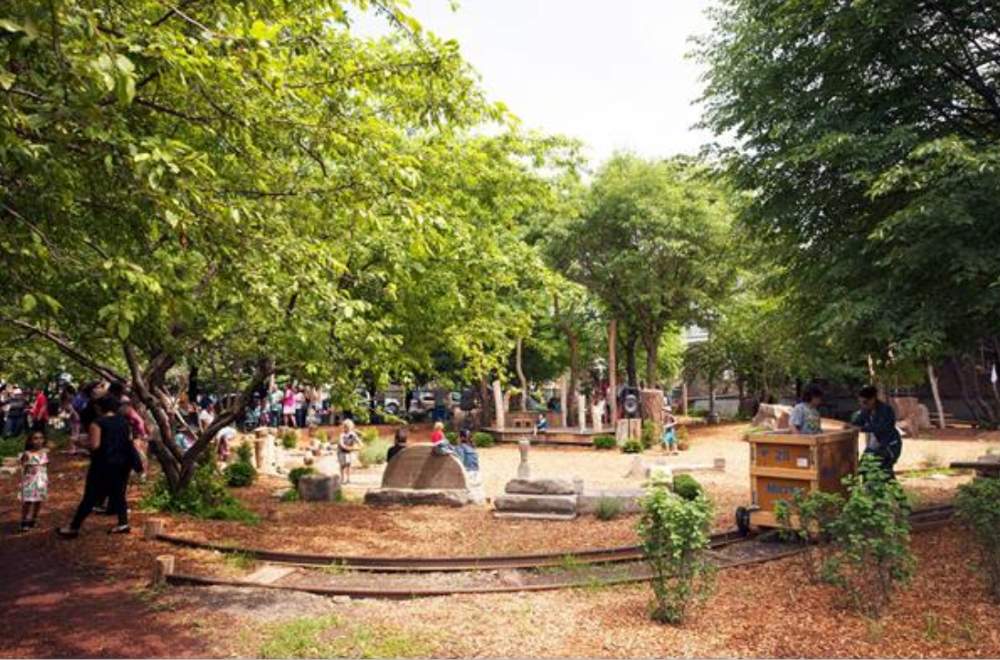
Source: site-design.com/projects/mckinley-park-nature-play/










Log In to comment on this item.
Subscribe
Report
My comments