


Historically, industrial uses along this stretch of the Chicago River have contributed to its environmental degradation. Currently, combined sewer overflows are the main source of pollution of Bubbly Creek. Work is underway to remediate the river and restore its natural habitat, which is an important component of improving its future recreational opportunities. Initiatives like the Great Rivers Chicago project are attempting to improve the connections between Bubbly Creek and the surrounding neighborhood, and enhance the recreational potential of this stretch of the river. More information about these projects can be found in the McKinley Park Existing Conditions Report. The recommendations in this plan reinforce these already initiated efforts, in order to ensure that the river is an ecologically healthy, well-utilized neighborhood asset.
Prioritize opportunities for open space amenities along the river
Bubbly Creek is an important natural resource for the community; however, its close proximity to industrial areas and lack of open space make it uninviting. In any future development along the river, open space should be prioritized to ensure that the residents have access to this natural amenity. Setback requirements outlined by the Chicago River Design Guidelines should be applied in any future development process, to create amenities like open space, public river walk trails, green infrastructure projects, as well as landscape buffers between the river and nearby industrial areas.
Figure 7.1 Rendering of Bubbly Creek Design Guidelines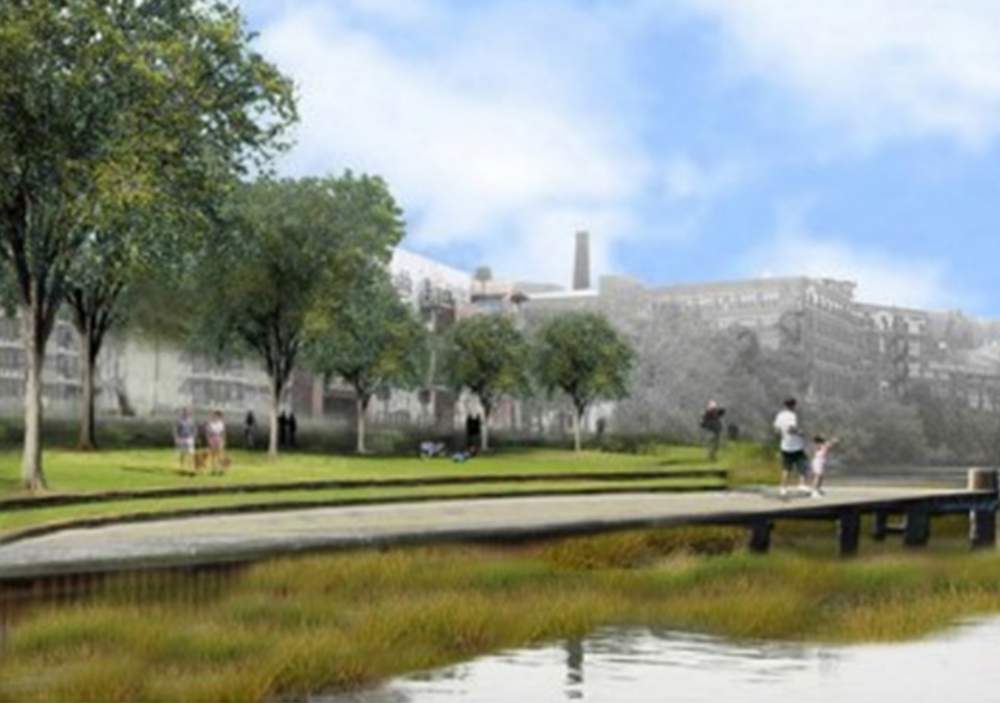
Source: Chicago River Design Guidelines, 2019
Ensure new development or property improvements that are within 100 feet of Chicago waterfront are consistent with the 2019 Chicago River Design Guidelines
Currently, Bubbly Creek is an underutilized asset that has the potential to improve the quality of life for McKinley Park residents. Any new development or property improvements along Bubbly Creek should be consistent with the 2019 Chicago River Design Guidelines, which guide waterfront development along the Chicago River. The design guidelines create a more unified aesthetic, enhance the natural environment and provide public access to the waterway, while balancing the importance of existing industrial uses along the river. Bubbly Creek has specific design guidelines that aim to mitigate the degraded conditions of the waterway. A wider set back of 60 feet is required for all new developments, to provide protection from sedimentation and erosion, as well as improve the river’s water quality. This offers an opportunity to use stormwater management best practices, create a public riverwalk trail, and use landscape buffering that can provide a barrier between industrial uses and the river.
Enhance connections between the river and the neighborhood
Better connectivity between the river and the neighborhood should be promoted for all modes of transportation, by creating amenities like river walk trails and connecting them to the street and sidewalk network, open space, and key neighborhood destinations. Crossing improvements for bicyclists and pedestrians at key intersections should include lighting for visibility, signalization, and signage. Improvements such as wayfinding signs should direct riverfront users to local destinations.
Encourage pride and stewardship of the river through education
A program should be developed to educate residents and property owners near the river about the benefits of native vegetation and restoration of riverbanks, and its impact on improved water quality and stormwater management. MPDC can encourage McKinley Park residents to become stewards of the river by coordinating with organizations like Friends of the Chicago River on implementing river education programs and organizing community-wide river stewardship days.
Other strategies
- Support Bubbly Creek restoration efforts
- Implement recommendations from the Our Great Rivers vision










Log In to comment on this item.
Subscribe
Report
My comments