


A report produced by the Center for Neighborhood Technology (CNT) found that one-inch rain events typically yield 10 million gallons of runoff per block in McKinley Park, with the most affected areas being Archer Avenue and the industrial districts (see Chapter 10 of the existing conditions report for a detailed analysis on stormwater). As stormwater finds its way to the Chicago River, it flows down streets and through industrial areas, picking up oils, debris, road salts, and other harmful pollutants.
In 2016, the city of Chicago published a Stormwater Management Ordinance Manual that offers a set of best management practices to control the stormwater-related impacts of development and redevelopment in the city. The city also has several key initiatives that address stormwater and are available to McKinley Park residents. Many of these are pioneering the use of green infrastructure approaches and have gained national attention.
To mitigate the negative effects of stormwater, the neighborhood plan recommends that MPDC, with support from the aldermen’s offices, promote and pursue existing citywide green infrastructure programs.
Recommended City of Chicago initiatives include:
- The Green Roof Initiative: Program awarding grants to residential or commercial projects to install a green roof.
- Green Alley Program: Program aimed to redesign city alleys for stormwater infiltration and storage using permeable pavement to capture stormwater.
- Basement Flooding Partnership: Partnership reated to provide technical support to communities challenged with localized flooding.
- Private Drain Repair: No-cost repair service to homeowners who can prove they have broken tiles in lateral lines between the sidewalk and the main sewer line.
- Space to Grow: Program aimed to transform Chicago schoolyards into vibrant green spaces while effectively managing stormwater. Led by Openlands and the Healthy Schools Campaign with funding from Chicago Public Schools, The Metropolitan Water Reclamation District of Greater Chicago, and the Chicago Department of Water Management.
Images 8.1 Green Alleys in Chicago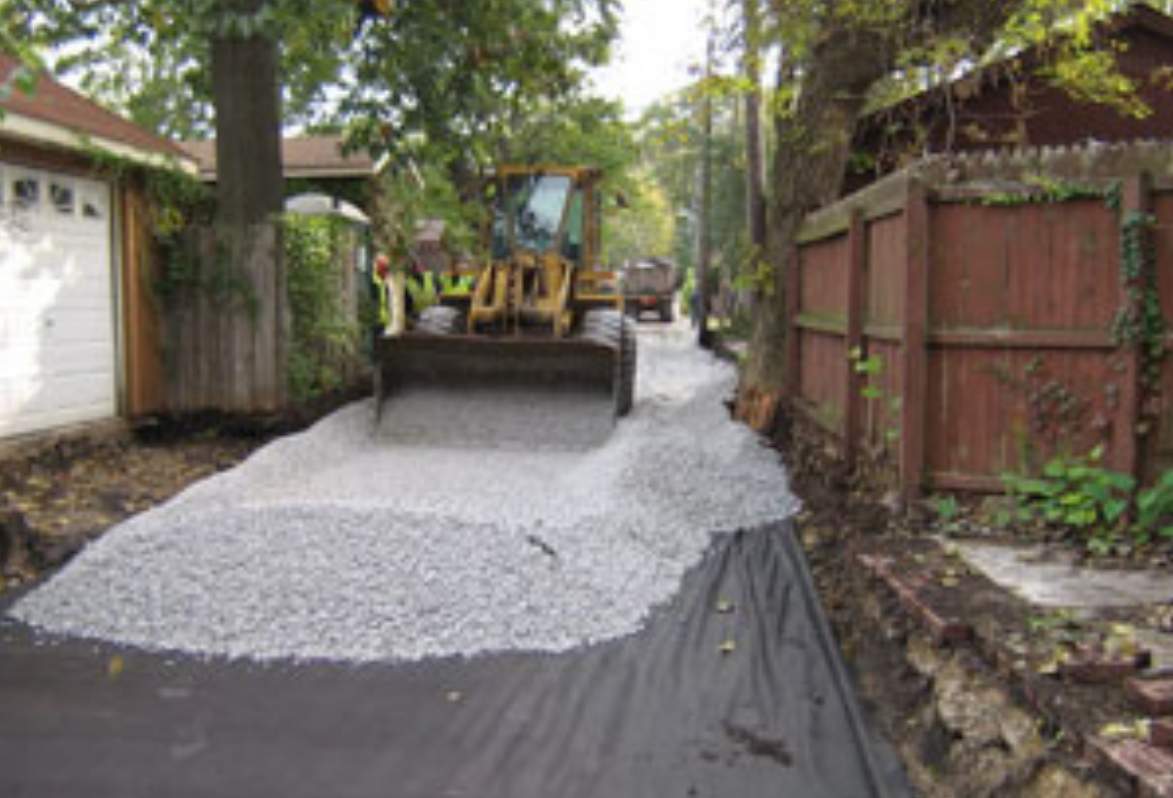
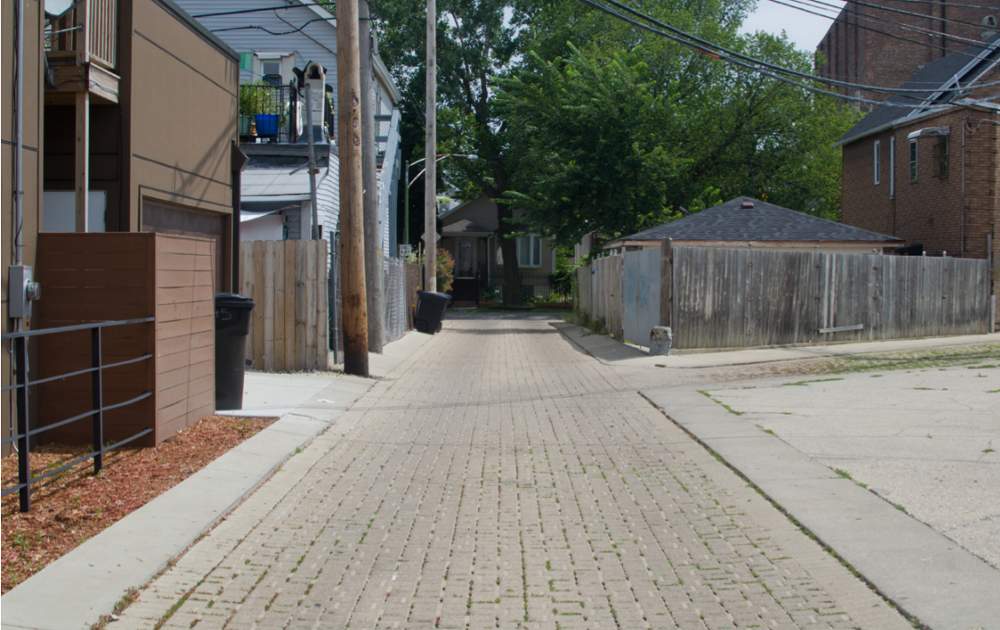
Source: City of Chicago
Case Study: El Paseo Community Garden
Located in Pilsen, El Paseo Community Garden was founded in 2009 and provides an example of how vacant space can be transformed to benefit the surrounding community. It is a Neighborspace-protected and community managed space, maintained by volunteers. Gardening is offered to residents through private allotment beds or collective beds. The garden is located on a former brownfield site and was constructed during the first phase of “El Paseo,” a rails-to-trails project. The garden features beautiful public art including El Abrazo Mural (pictured), the Shed Installation by Chip Thomas, and the Loomis River Bridge. The garden also puts on volunteer days, educational gardening workshops, potluck parties, and annual harvest festival, a Halloween haunted garden, pop-up markets, weekly yoga, and weekly meditation.
Work with city and local organizations to identify vacant land that is appropriate for green infrastructure projects in public or community managed open spaces
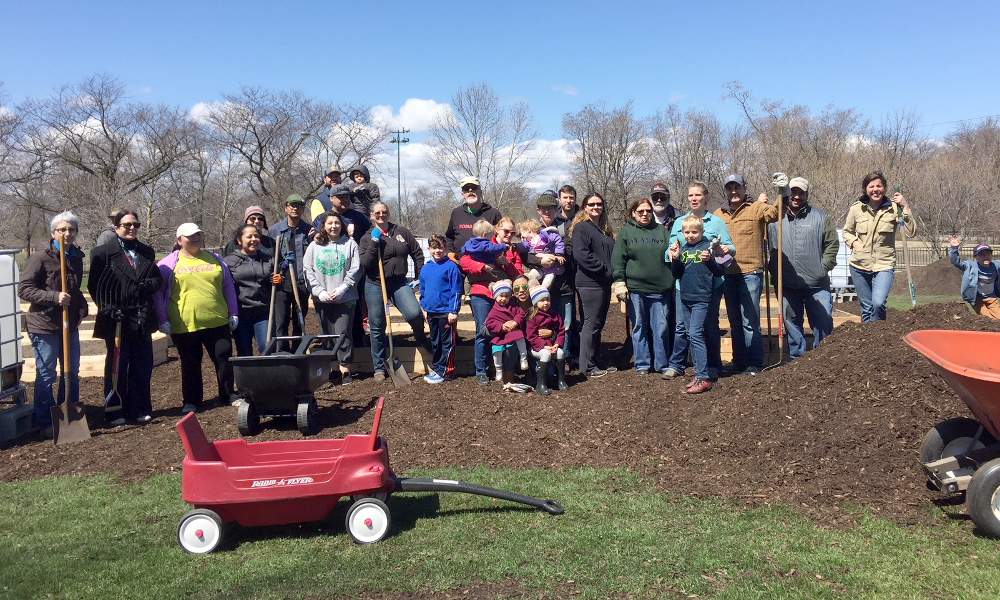 From "Community Gardeners Finish New Site Buildout," published April 30, 2018, in the McKinley Park News.Vacant land in McKinley Park accounts for 6.6 percent (53.8 acres) of the overall land use. While robust redevelopment is desired in all zones over the long term, in the interim there are several strategies for repurposing vacant residential lots for uses other than new housing. For example, the McKinley Park Community Garden had its original home in a private, empty lot before relocating in 2016 to a new, permanent location that was approved by the Chicago Park District. Such strategies can improve quality of life while helping improve the local market and feasibility of future development. Potential uses for currently vacant lots include:
- Urban agriculture (gardens, apiary) and community gardens
- Community gathering and event spaces
- Expanded side lots for existing homes
- Temporary sports lots and play spaces
- Green infrastructure for stormwater management
- Public art
Incorporate stormwater landscapes along designated bike routes within the neighborhood
Identify strategic locations along designated bike routes and on city-owned land to develop stormwater landscapes as part of the Department of Water Management’s Green Stormwater Infrastructure Strategy. The plan recommends that key improvements focus on the main corridors that run through McKinley Park, such as Archer Avenue, 35th Street, Western Avenue, and Pershing Road, for such treatments as sidewalk tree pits that capture street runoff, parkway bioswales, rain gardens, and permeable pavement parking lanes. By integrating green infrastructure into streetscape projects, McKinley Park will be in a much better position to reduce flooding in future storms and protect the environment going forward (see strategy 5.2d).
Partner with the Illinois Green Alliance’s Youth and Green Schools initiatives to implement carbon drawdown strategies
The Illinois Green Alliance’s Youth and Green Schools initiative offers several programs that encourage students to promote sustainability within their own communities. For example, the Green Apple Day of Service brings parents, teachers, students, companies, and local organizations together to transform schools into healthy, safe, and productive learning environments through local service events. The initiative also has a program called Green Ribbon Schools that recognizes schools that promote and educate people about sustainability through events, actions, or programs. The neighborhood plan recommends that MPDC reach out to this program to inquire about opportunities to partner.










Log In to comment on this item.
Subscribe
Report
My comments