


One of the primary goals of the Neighborhood Plan planning process was to fully and effectively engage the community. McKinley Park is one of the most racially and ethnically diverse communities in the City of Chicago. To provide mechanisms for meaningful outreach in such a diverse community, CMAP staff devised a public outreach strategy with MPDC and the steering committee to execute several approaches for public participation. The project team used one-on-one confidential interviews, steering committee meetings, a focus group, listening meetings, and an interactive online survey, and also attended several events and meetings in the community.
The outreach efforts had five major goals:
- Engage a broad representation of the community in the planning process.
- Educate the community about the purpose of the project.
- Garner public input on key issues and opportunities for McKinley Park.
- Create a shared vision for McKinley Park.
- Build community capacity to implement the plan.
Outreach Results
Figure 1. McKinley Park Area Study Context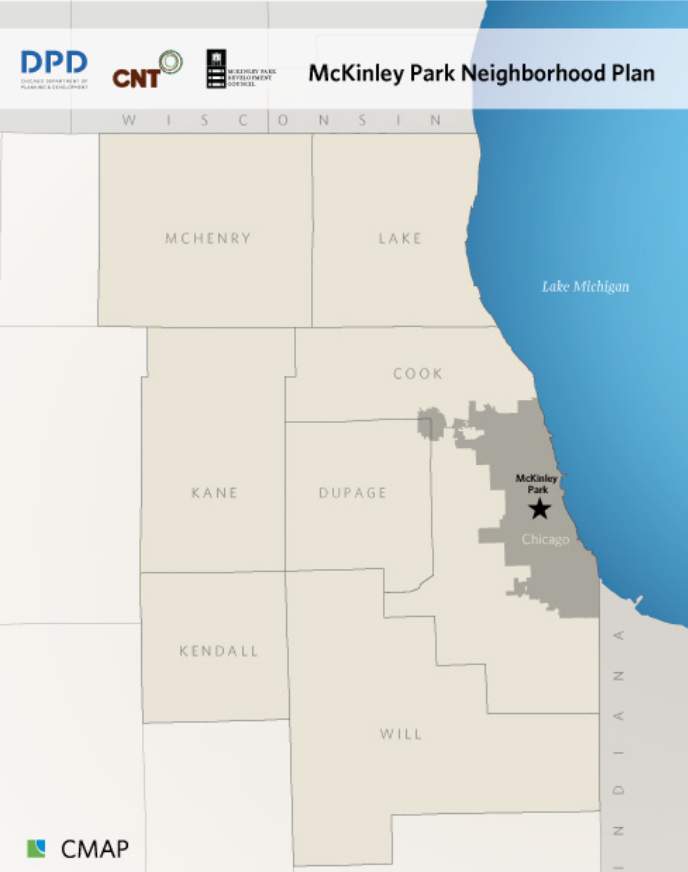 More than 820 residents and stakeholders have contributed their input since the start of the formal planning process. Overall, participants held many of the same concerns and generally expressed the desire to build upon the many assets of the neighborhood. Most participants want to maintain the industrial heritage of the neighborhood but also expressed health and nuisance concerns related to those uses. The new asphalt plant rose as a major concern related to environmental quality and highlighted the need for improved transparency in the development approval process. The community envisions a new direction for industrial uses and sees public engagement in the development process essential to realizing that vision.
Longtime residents reported their desire to preserve the close-knit and diverse culture that exists in their community. Gentrification and displacement were identified as priority concerns, and residents stressed the importance of preserving housing affordability to combat displacement. Stakeholders mentioned the need to support local businesses, particularly along 35th Street, and prioritize economic development along main commercial corridors.
Safety for those walking and biking in the neighborhood is a primary concern, particularly along high-traffic-corridors like Archer Avenue. Many people would like to see designated bike lanes and trails for active transportation, as well as streetscape improvements for pedestrians. Community-based programming for all ages was also a key priority for many residents.
In addition, many stakeholders would like to capitalize on their neighborhood parks, connection to the boulevard system, and proximity to the river to promote livability and attract residents, visitors, and shoppers to the neighborhood. Photos from outreach events are found in Appendix C.










Log In to comment on this item.
Subscribe
Report
My comments